Sunday, March 31, 2024

Explore a beautiful floral exhibition at Frank Lloyd Wrights Hollyhock House

hollyhock house

She never questioned the beauty or significance of Wright’s work on Olive Hill, but with early leaks and no theater to speak of, the house had lost its luster for Barnsdall. She did, however, reengage with Wright on numerous occasions after 1921, enlisting him to design a school house for the property as well as preliminary plans for another residence in Beverly Hills; neither were realized. In 1915, Aline Barnsdall, an oil heiress, first approached Frank Lloyd Wright not to build a house but a theater.

HOLLYHOCK HOUSE

For Hollyhock House, Barnsdall asked Wright to incorporate her favorite flower, the hollyhock, into the home’s design. As with many of Wright's residences, Hollyhock House has an "introverted" exterior with windows that seem hidden from the outside, and is not easy to decode from the outside. The house is arranged around a central courtyard with one side open to form a kind of theatrical stage (never used as such), and a complex system of split levels, steps and roof terraces around that courtyard.

hollyhock house

Friends of Hollyhock House (FOHH)

In 2007, the City and Project Restore, a public-private partnership, began planning a project to address structural needs and restoration. In 2010, the project team began four years of work to repair and prevent water damage, seismically strengthen the house, restore historic elements, and reverse past alterations. Built between 1919 and 1921, Hollyhock House was the first Los Angeles commission for the legendary architect Frank Lloyd Wright.

Frank Lloyd Wright's Hollyhock House: The Story of an LA Icon

Oil heiress Aline Barnsdall commissioned the house as the centerpiece of a cultural arts complex on Olive Hill, which was to include a major theatre, cinema, artist residences, and commercial shops. For Hollyhock House, her personal residence, Barnsdall asked Wright to incorporate her favorite flower, the hollyhock, into the design. In 1927, Barnsdall donated the house and the surrounding 12 acres (now Barnsdall Park) to the City of Los Angeles. Today, Hollyhock House is owned and operated by the Department of Cultural Affairs (DCA). Yet it was renovated several times, had long suffered from water intrusion, and was damaged in the 1994 Northridge earthquake.

Explore Frank Lloyd Wright's gardens at the Ebell - Park Labrea News/Beverly Press

Explore Frank Lloyd Wright's gardens at the Ebell.

Posted: Thu, 11 Apr 2024 18:25:27 GMT [source]

He designed it for Aline Barnsdall, a wealthy iconoclast and patron of the arts (learn more about her here). Barnsdall envisioned the house as the centerpiece of an artists’ colony on Olive Hill in the neighborhood of Los Feliz. Hollyhock House was designed by America’s most important 20th-century architect, Frank Lloyd Wright. Aline Barnsdall was also a philanthropist and in 1927 gave the house and the surrounding twelve acres atop Olive Hill (now Barnsdall Park) to the City of Los Angeles as a memorial to her father Theodore. With project delays and cost overruns, he then left the project only partially realized. Within a few years, Barnsdall began to consider gifting the house and surrounding parklands to the City of Los Angeles.

100 years after Frank Lloyd Wright finished construction on Aline Barnsdall’s Residence A guest house, the City of Los Angeles has concluded phase I restoration of this landmark structure. The first video provides an overview from the project team, discussing the home’s significance, what’s been done in phase I, and what work is still to come. Barnsdall bought Olive Hill in 1919 from the widow of the man who had planted the olive trees. Wright eventually came up with grand plans that suited Barnsdall's theatricality, although she and her daughter never lived in the house that Wright built.

Timeline

A passionate supporter of the arts, she was a stage producer—earning critical acclaim for her avante-garde productions for children and adults alike in Chicago, New York, and Los Angeles (while awaiting a Wright-designed theater that never came). In 1919, she purchased Olive Hill, a 36-acre mount on Hollywood’s eastern edge and far north of downtown Los Angeles. With the site secured, the commission grew to include plans for the theater, a cinema, artist residences, commercial shops, two guest houses, and a residence for Barnsdall.

Barnsdall Art Park on Olive Hill in Hollywood, California is now owned and run by the City of Los Angeles. The City of Los Angeles is home to many architectural treasures, none more intriguing than Hollyhock House. The Department of Cultural Affairs manages this and four other entities in Barnsdall Art Park, but the focus of this photo journey is on Hollyhock House. Built between 1919 and 1921, the house realized by Wright for Louise Aline Barnsdall is an architectural experiment among landscaped gardens, hardscaped pools, and galleries of art on Olive Hill.

Water is meant to flow from a pool in the courtyard through a tunnel to this inside moat, and out again to a fountain. Disillusioned by the costs of construction and maintenance, Barnsdall donated the house to the city of Los Angeles in 1927[8] under the stipulation that a fifteen-year lease be given to the California Art Club for its headquarters. The club was there until 1942 when the house was almost demolished.[9] The house has been used as an art gallery and as a United Service Organizations (USO) facility over the years. Beginning in 1974, the city sponsored a series of restorations, but the structure was damaged in the 1994 Northridge earthquake.

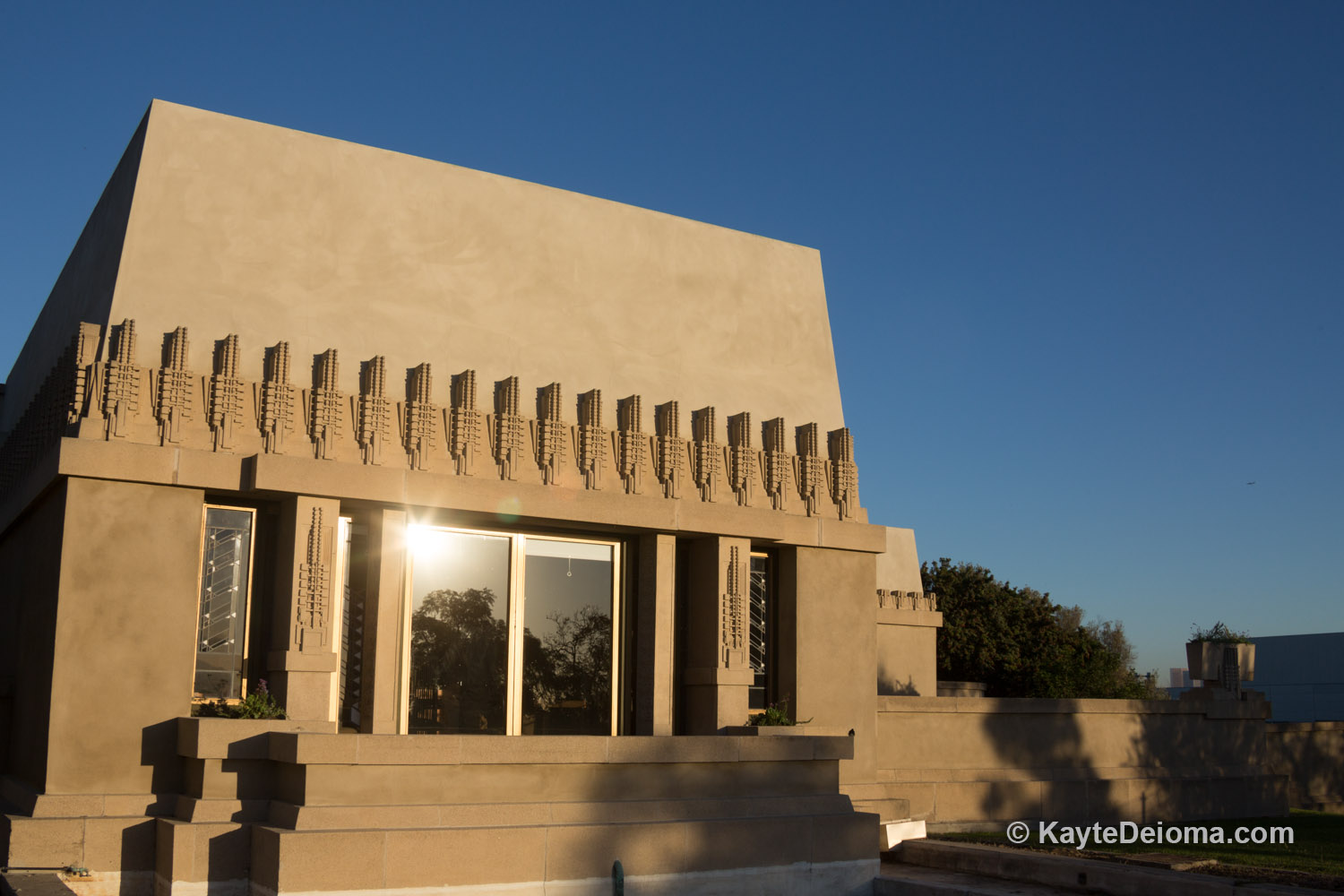
Frank Lloyd Wright's Hollyhock House, Los Angeles

hollyhock house

He designed it for Aline Barnsdall, a wealthy iconoclast and patron of the arts (learn more about her here). Barnsdall envisioned the house as the centerpiece of an artists’ colony on Olive Hill in the neighborhood of Los Feliz. Hollyhock House was designed by America’s most important 20th-century architect, Frank Lloyd Wright. Aline Barnsdall was also a philanthropist and in 1927 gave the house and the surrounding twelve acres atop Olive Hill (now Barnsdall Park) to the City of Los Angeles as a memorial to her father Theodore. With project delays and cost overruns, he then left the project only partially realized. Within a few years, Barnsdall began to consider gifting the house and surrounding parklands to the City of Los Angeles.

Hollyhock House Native Plantings Featured at Frank Lloyd Wright Symposium Saturday - Larchmont Buzz

Hollyhock House Native Plantings Featured at Frank Lloyd Wright Symposium Saturday.

Posted: Mon, 08 Apr 2024 07:00:00 GMT [source]

Places to Stay in Los Angeles

Water is meant to flow from a pool in the courtyard through a tunnel to this inside moat, and out again to a fountain. Disillusioned by the costs of construction and maintenance, Barnsdall donated the house to the city of Los Angeles in 1927[8] under the stipulation that a fifteen-year lease be given to the California Art Club for its headquarters. The club was there until 1942 when the house was almost demolished.[9] The house has been used as an art gallery and as a United Service Organizations (USO) facility over the years. Beginning in 1974, the city sponsored a series of restorations, but the structure was damaged in the 1994 Northridge earthquake.
Get our monthly email updates on what’s happening in Los Angeles County

She never questioned the beauty or significance of Wright’s work on Olive Hill, but with early leaks and no theater to speak of, the house had lost its luster for Barnsdall. She did, however, reengage with Wright on numerous occasions after 1921, enlisting him to design a school house for the property as well as preliminary plans for another residence in Beverly Hills; neither were realized. In 1915, Aline Barnsdall, an oil heiress, first approached Frank Lloyd Wright not to build a house but a theater.

The Barnsdall Library

100 years after Frank Lloyd Wright finished construction on Aline Barnsdall’s Residence A guest house, the City of Los Angeles has concluded phase I restoration of this landmark structure. The first video provides an overview from the project team, discussing the home’s significance, what’s been done in phase I, and what work is still to come. Barnsdall bought Olive Hill in 1919 from the widow of the man who had planted the olive trees. Wright eventually came up with grand plans that suited Barnsdall's theatricality, although she and her daughter never lived in the house that Wright built.

In 2007, the City and Project Restore, a public-private partnership, began planning a project to address structural needs and restoration. In 2010, the project team began four years of work to repair and prevent water damage, seismically strengthen the house, restore historic elements, and reverse past alterations. Built between 1919 and 1921, Hollyhock House was the first Los Angeles commission for the legendary architect Frank Lloyd Wright.

hollyhock house

Barnsdall Art Park on Olive Hill in Hollywood, California is now owned and run by the City of Los Angeles. The City of Los Angeles is home to many architectural treasures, none more intriguing than Hollyhock House. The Department of Cultural Affairs manages this and four other entities in Barnsdall Art Park, but the focus of this photo journey is on Hollyhock House. Built between 1919 and 1921, the house realized by Wright for Louise Aline Barnsdall is an architectural experiment among landscaped gardens, hardscaped pools, and galleries of art on Olive Hill.

A passionate supporter of the arts, she was a stage producer—earning critical acclaim for her avante-garde productions for children and adults alike in Chicago, New York, and Los Angeles (while awaiting a Wright-designed theater that never came). In 1919, she purchased Olive Hill, a 36-acre mount on Hollywood’s eastern edge and far north of downtown Los Angeles. With the site secured, the commission grew to include plans for the theater, a cinema, artist residences, commercial shops, two guest houses, and a residence for Barnsdall.

Oil heiress Aline Barnsdall commissioned the house as the centerpiece of a cultural arts complex on Olive Hill, which was to include a major theatre, cinema, artist residences, and commercial shops. For Hollyhock House, her personal residence, Barnsdall asked Wright to incorporate her favorite flower, the hollyhock, into the design. In 1927, Barnsdall donated the house and the surrounding 12 acres (now Barnsdall Park) to the City of Los Angeles. Today, Hollyhock House is owned and operated by the Department of Cultural Affairs (DCA). Yet it was renovated several times, had long suffered from water intrusion, and was damaged in the 1994 Northridge earthquake.

For Hollyhock House, Barnsdall asked Wright to incorporate her favorite flower, the hollyhock, into the home’s design. As with many of Wright's residences, Hollyhock House has an "introverted" exterior with windows that seem hidden from the outside, and is not easy to decode from the outside. The house is arranged around a central courtyard with one side open to form a kind of theatrical stage (never used as such), and a complex system of split levels, steps and roof terraces around that courtyard.

Book Review: A Philosophy of Software Design

a philosophy of software design

These interfaces accumulate to create tremendous complexity at the system level. Small classes also result in a verbose programming style, due to the boilerplate required for each class. People oftenbreak a routine into multiple functions for the purpose of making it "easier" toread, or to avoid some code duplication, or to lower a cyclomatic complexityscore.

Why I recommend this book

This book discusses how to decompose complex software systems into modules that can be implemented relatively independently. The discussion first begins with a fundamental problem in software design, managing complexity. It then discusses philosophical issues about how to approach the software design process, and it presents a collection of design principles to apply during software design. The benefit of using the interface rather than the implementation directly is not very big, so it doesn’t help in reducing the complexity of the system. It is interesting that this is the complete opposite of the advice in for example Clean Code. There the mantra is to use many small classes and methods, rather than a few bigger ones.

Chapter 12 — Why Write Comments? The Four Excuses

The first part of the book focuses on good, modular design practices, while the second part of the book touches on techniques to make the code simple, as well as goes in-depth on commenting best practices. People sometimes ask me if there are other books on design that I would recommend. Unfortunately, I haven't seen very many publications that I like, but one book I do like is The Art of Readable Code by Dustin Boswell and Trevor Foucher. It's written at a lower level than APOSD (more about coding than design), but it is compatible with APOSD in philosophy has a bunch of good ideas.

Chapter 15 — Write The Comments First

Stanford University Professor of Computer Science John Ousterhout says it is a decomposition problem. In his book “A Philosophy of Software Design,” he advocates that good software design means fighting complexity and recommends different strategies for dealing with it. The book was initially published in 2018, and its second edition was released in 2021.

This increases the interface complexity of a module,without increasing the total functionality of the system. It can indicate thatthere is confusion over the division of responsibility between modules orclasses. While all of the above is sensible, personally still prefer single-purpose interfaces, even if that might leave some implementation separately, that could technically be combined. In the case of microservices, an important guiding principle is to avoid separating services while they use/modify the same data source.

a philosophy of software design

John mentions that consistent naming contributes to less complexity - something I wholeheartedly agree with. This approach can be used at different system levels, from the interface selection to the method implementation. For interfaces, we are the one that matches close the operations happening in higher-level software, while for implementations, the goals are simplicity and performance. The two main approaches areto see if you can add the pass-through state onto an object that is alreadyshared between the top and bottom methods, or to make it a globalvariable. Other strategies include masking, where the exception is caught and handled at a lower level, so the caller doesn’t have to, and exception aggregation, reducing the number of exceptions that must be handled. The tactic of defining cases out of existence can also be used on special cases.

Classes should be deep, and interfaces simple

Q&A: Technology Expert and UVA Grad Gary McGraw Talks Cybersecurity - UVA Today

Q&A: Technology Expert and UVA Grad Gary McGraw Talks Cybersecurity.

Posted: Tue, 21 Mar 2017 07:00:00 GMT [source]

This isbecause handler functions aren't invoked directly - it depends on which handlerswere registered at runtime. The first example that jumps to mind personally is Django - the class hierarchyalways seemed to add more complexity than it solved in a lot of cases. Ingeneral I think it's very easy for the complexity of inheritance to outweigh theutility. Decorators are often shallow pass-through methods that add a lot of boilerplatewithout adding much new functionality.

Chris Richardson on Design-Time Coupling in Microservices - InfoQ.com

Chris Richardson on Design-Time Coupling in Microservices.

Posted: Mon, 21 Jun 2021 07:00:00 GMT [source]

A Literature-Informed Model for Code Style Principles to Support Teachers of Text-Based Programming

Even if you don’t agree with everything it is still a good addition to your library of programming books. I very much recommend the first half of the book - chapters 1-9 and chapter 14 - for all software engineers to read, digest, and consider applying. Concepts like depth of modules, layers adding complexity - or keeping complexity at bay - and information hiding are pragmatic tools to use when designing software. The book offers a fresh take on the concept of abstractions, and nicely complements principles like simplicity, KISS (Keep it Simple, Stupid) and YAGNI (You Ain't Gonna Need It). I have to disagree with the excessive use of code comments, although the author mentions that we should use them only for what is not apparent.

The author makes a solid case against classitis – the compulsion (particularly in the Java community) to split everything into a new class.

This is a list of approaches, styles, methodologies, and philosophies in software development and engineering. It also contains programming paradigms, software development methodologies, software development processes, and single practices, principles, and laws. A pass-through method is one that does little except invoke another method witha similar signature.

However, the final 70 pages are filled with recommendations about code comments that I find hard to support. Most of the examples the author provides of useful comments could easily be replaced with better named variables and methods. Because of this poor advice, I can’t recommend this book for junior engineers.

(it's 180 pages, so it's a quick read.) Each chapter is short and to the point, like the entire book. This doesn't mean "generalised" implementations that support extra features thatyou don't need - it means writing methods that are not overly specialised. Thesweet spot is a somewhat general-purpose approach, which hopefully provides asimpler and deeper interface. "Agile" and similar approaches to software development tend to be focused onsmall, tactical changes. It's easy in this environment to forget about investingin the codebase, especially in startup companies that have a lot of pressure todeliver features.

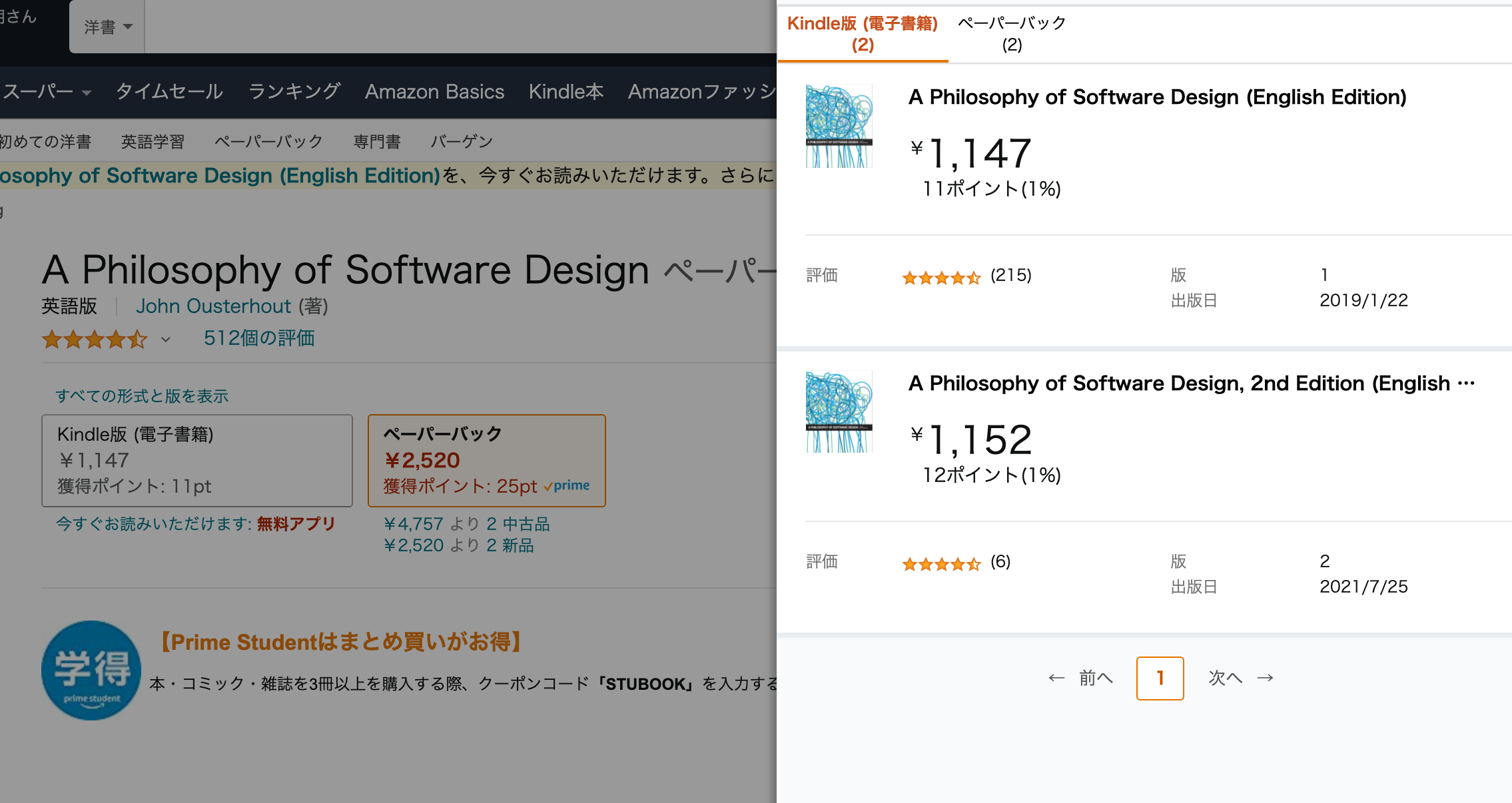
A Philosophy of Software Design: My Take and a Book Review The Pragmatic Engineer

a philosophy of software design

There isn't much to say about this, other than thatI intuitively agree. The book is also quite small and light which makes a great read for your daily commutes. The author emphasises the benefits of trying to stay in Technical Credit rather than Technical Debt. John, on the other hand, had the vantage point of having multiple teams solve the same design problem during a semester, with him observing. With each repeat, he was able to both validate and tweak his observations.

Event-driven programming makes code less obvious

I particularly like the way the author challenges conventional thinking within software industry and highlights the inefficiency in this thinking. Despite this, the critical issue in any software project is always how to successfully manage the complexity going forward. In the particular project I am architecting there are a lot of moving parts, integrations and complex workflows that need to be addressed, this can often result in spinning out of control quickly.

Chapter 13 — Comments Should Describe Things that Aren’t Obvious from the Code

This kind of decomposition has a different purpose to designingpublic interfaces, but sometimes get added to the public API of a class ormodule. The primary focus of the book is about attempting to eliminate or at least reduce complexity in software. This can be achieved by taking more time and consideration in the design and thinking about the implications of design. Related to the concept of deep modules is the advice to make them “somewhat general purpose”.

Comments

It's awell-structured, concise read about managing complexity in software design. An example of a deep module is the Unix/Linux system calls for I/O operations. There are five of them (open, read, write, lseek, close), and the signatures are simple, but they hide an enormous amount of implementation details on how files are stored and accessed on disk. In contrast, an example of a shallow module is the Java I/O classes. In order to open and read from a file, you need to use a FileInputStream, a BufferedInputStream and a ObjectInputStream.

A philosophy of software design - John Ousterhout

This means that the interface of some functionality should be a lot simpler than its implementation. That way, the cost of understanding and using the interface is lower than the benefit of the implemented functionality, thus helping to lower the overall complexity of the system. A module in this sense can be anything from a method or function, to a class or a subsystem. The goal of software design is to reduce the complexity of the system.

Writing up, sharing, and debating design with other peers is a practice more and more common in tech companies. This includes both whiteboarding and presenting to a group of peers, as well as more formal RFC-like design processes. While it might be less applicable to the course John taught, it's a practice that comes with many benefits. These days, as shared editing and commenting tools are more common, with editors like Google Docs and O365.

Case Study: A Philosophy of Automation - Automation.com

Case Study: A Philosophy of Automation.

Posted: Mon, 14 Dec 2020 08:00:00 GMT [source]

The author generally supports writing unit tests, which can catch problems during refactoring; he doesn’t like TDD. When fixing defects that can be tested beforehand, he suggests adopting TDD so that the test may verify that the bug was fixed once the required adjustments have been made. The book also introduces a set of red flags that identify design problems.

Whitespace can help break up code into logical blocks

There are multiple chapters on code comments; even Chapter 15 has the title “Write The Comments First” (Comments-first development?). He states, “Every class should have an interface comment, every class variable should have a comment, and every method should have an interface comment.” This way of thinking introduces a lot of noise in the code. Such comments need to be constantly synced with the changes in the code.

a philosophy of software design a philosophy of software design

However, it turns out that the most common use of unset was to clean up temporary state created by a previous operation. But it was hard to know how far the previous operation had progressed, so it was hard to know if a variable had been created or not. Thus you had to be prepared to handle exceptions from unset in a lot of places. It would have been much more useful, and simpler, if unset had been defined to mean that it ensures a variable with that name does not exist after it has been run, regardless of if it existed before or not. If your code throws an exception, you are forcing all callers of that code to be prepared to handle it if it happens.

Sharing design ideas upfront and opening a debate using these tools is a great way to build more sturdy architecture. Especially when applying the "design it twice" principle, and writing up alternative designs considered, and the tradeoffs why the other design was not chosen. Still, I wondered just how much I would learn about software design from experience partially distilled from a classroom - even if a Stanford classroom.

However, in my opinion, the documentation of a system is not the sum of the comments. It is a separate document that describes how the system fits together. Extracting the JavaDoc comments from all the classes does not become the documentation. Nothing highlights which classes are most important, and what the overall structure is. The chapter on optimization starts by listing typical times taken by various operations such as network communication, I/O to storage (disk, flash), memory allocation and cache misses.

Still, they all present interesting viewpoints, backed with examples. They also make for potentially sound advice to give, when mentoring less experienced engineers. Ousterhout argues that the best modules are those that provide powerfulfunctionality, but have a simple interface. He describes these as deep modules,in contrast to shallow modules, which have a complex interface but not muchfunctionality, thereby not hiding significant complexity. After that, you have to concentrate on speeding up the most commonly executed path. Currently maybe several method calls are used, but perhaps all the work could be done in a single method call.

Designing things twice (Chapter 11) is a suggestion that hits close to home. This is advice I've been suggesting to people to get better at designing systems, well before I read this book. This post summarizes key takeaways of the book and my take on these principles, drawing from my professional and industry experience.

It was one of the primary sources of making procedural/spaghetti code and the source of many unpredictable bugs. I agree with the author that we should write comments if we have to explain something tricky (such as an algorithm or something similar) or non-obvious (why, not how). In addition, the author mentions a famous API design antipattern involving overexposing internals, which later adds to an architecture debt. One way to make code more obvious to the reader is to have blank lines betweenparts that are logically separate, and maybe to preface the code block with animplementation comment. The overall complexity of a system can be determined by the complexity of eachpart, weighted by the fraction of time developers spend working on that part. Ifyou isolate complexity in a place where it will never be seen, then that'salmost as good as eliminating it entirely.

It continues with the standard advice of always measuring instead of assuming. When optimizing, the biggest gains can usually be had by fundamental changes. For example by introducing a cache, or changing the algorithm or data structure. As a budding developer, using jQuery extensively taught me the importance of simple interfaces in driving adoption of your code. On page 68, the author mentions the GOTO command to eliminate duplication by refactoring the code so that we can escape from the nested code. This is a big surprise, as the GOTO command has been considered a terrible idea by most authors for decades now.

You often throw an exception because you don’t know what to do in that case. But if you have trouble knowing what to do, chances are the caller also has trouble knowing what to do. If you can define your functionality such that it never needs to throw an exception, then you have reduced the complexity of the system. There are few books that discuss software design in a simple and approachable way, while leaving the reader novel and practical concepts to use. A Philosophy of Software Design is a standout and recommended read for this reason.

27 Best Curly Hair Products From Shampoos And Masks To Hair Towels

Table Of Content Amika Defining Cream Best clean and shine shampoo for curly hair rahua Aloe Vera Hair Gel Best Vegan: amika Plus Size Perfe...